

 Tracy Jackson15 yrs in online marketing
Best AI Tools for B2B Sales Teams in 2026: Which one is Best?
Table of Contents
Sales teams today face a tricky challenge: how to connect with the right buyers quickly without getting bogged down by tedious tasks. That’s where AI tools come in, offering ways to work smarter, not harder.
Over the past year, I’ve seen firsthand how mixing smart AI automation with personal touches can help B2B sales teams find leads faster and have better conversations. This article serves as a guide to the best AI tools for B2B Sales Teams in 2026 that makes those wins possible—and why they matter more than ever for boosting team productivity by streamlining the sales pipeline.
A crucial aspect of this process is effective prospecting, which is greatly enhanced by leveraging a comprehensive list of potential buyers generated through AI capabilities, allowing sales teams to identify and zero in on target accounts with exceptional precision, thereby functioning as a powerful sales tool.
A pivotal component of these tools is their ability to increase visibility in the market, ensuring that teams have a clear view of opportunities and challenges. Additionally, enhancing customer engagement through strategic content creation allows these AI tools to foster meaningful interactions and relationships.
The best AI tools for B2B sales teams in 2026 include Cognism for AI-powered lead generation with compliant European data, Overloop AI for ultra-personalized multi-channel outreach automation, and Salesforce Sales Cloud equipped with Einstein Copilot for CRM enhancement and predictive forecasting. Complementary solutions like Fireflies.ai for meeting note-taking and Gong.io for conversation intelligence further streamline workflows and boost deal closure rates, ensuring a smooth pipeline from start to finish.
Disclaimer: If you buy something using the links in this article, I may receive a commission at no extra cost to you.
Know that I only promote stuff that I use and trust for the sake of my readers and the reputation of this site.

ROI Calculator
| Sales task | Manual time/week (per rep) | Illustrative AI-assisted scenario | Time saved | Value at $80k OTE rep cost | Value at $120k OTE rep cost | Evidence status |
|---|---|---|---|---|---|---|
| Prospect research (10 accounts) | 3–4 hrs* | 45–60 min* | ~2.5 hrs* | $96/wk | $144/wk | Modeled estimate. Salesforce supports the broader claim that reps spend almost one full day per week on prospecting. (Salesforce) |
| Personalised outreach emails (20) | 2–3 hrs* | 30–40 min* | ~2 hrs* | $77/wk | $115/wk | Modeled estimate. Gong supports AI for email/customer engagement automation. (Gong) |
| CRM data entry and updates | 1.5–2 hrs* | 10–15 min* | ~1.5 hrs* | $58/wk | $87/wk | Modeled estimate. Gong supports automated data entry and Salesforce supports admin burden. (Gong) |
| Call prep and note-taking | 1–1.5 hrs* | 10–15 min* | ~1 hr* | $38/wk | $58/wk | Modeled estimate. Gong supports call summaries/note-taking use cases. (Gong) |
| Post-call follow-up drafting | 45–60 min* | 10 min* | ~45 min* | $29/wk | $43/wk | Modeled estimate. Gong supports AI-assisted follow-up/email workflows. (Gong) |
| TOTAL PER REP | 9–12 hrs/week* | 2–2.5 hrs* | ~7.75 hrs* | $298/wk | $447/wk |
Best AI Tools for B2B Sales Teams in 2026
Among the standout solutions, Cognism commands attention with its AI-driven lead generation capabilities. Covering over 90% of EU decision-makers allows teams to zero in on the right contacts without wasting time chasing dead ends. Effective prospecting is amplified by their ability to generate a detailed list of potential clients that aligns perfectly with target accounts.
What truly sets Cognism apart are the one-click company research summaries it generates—instant, context-rich profiles that arm you for a conversation without hours of prior digging. This enhanced visibility allows sales teams to make more informed decisions, efficiently navigating the sales landscape.
That kind of speed matters when every interaction counts in maintaining an efficient sales pipeline, establishing it as a vital sales tool for any modern team.
Furthermore, incorporating customer engagement strategies through content creation can significantly amplify the impact of these interactions by ensuring the content resonates with clients.
Of course, such robust coverage comes at a price; starting at $12,750 annually for a standard plan, Cognism is a calculated investment—best suited for teams ready to harness detailed intelligence to supercharge their pipelines.
While Cognism sharpens our targeting from the outset, Overloop AI excels further down the funnel by personalizing outreach with surgical precision, keeping the sales pipeline active and healthy.
Overloop AI’s multi-channel campaigns create an experience that feels anything but automated—it crafts ultra-personalized emails and messages so tailored that open rates have climbed by as much as 30%.
This increase isn’t just a vanity metric; it translates directly into deeper engagement and more qualified conversations, pushing prospects further along the sales pipeline. The key to this success is a refined prospecting technique, supported by a meticulously curated list that includes target accounts, ensuring that each contact receives the most relevant and impactful communication.
This approach makes Overloop an indispensable sales tool for nurturing prospects and guiding them toward conversion by enhancing their visibility in the vast digital marketplace.
Its ability to enhance customer engagement through strategic content creation ensures that each piece of communication strengthens the relationship with potential buyers, seamlessly integrating with sales processes to refine how we approach each client interaction.
From our perspective, its credit-based pricing model aligns well with varying business sizes and needs, offering flexible scaling after demo consultations. Whether running a pilot or rolling out enterprise-wide campaigns, Overloop adjusts seamlessly alongside us, ensuring that sales pipeline objectives and sales processes are met efficiently and effectively.
Bringing all this intelligence together under one roof is where Salesforce Sales Cloud shines brightest—especially now enhanced by Einstein Copilot AI, which keeps the pipeline flowing smoothly.
Integrating robust customer engagement strategies coupled with insightful content creation, Salesforce ensures that every piece of interaction is meaningful and impactful, perfectly meshed with existing sales processes.
Users frequently highlight how Einstein Copilot lifts fundamental sales tasks off their plates, acting as an advanced sales tool guiding users through complex market environments with ease.
It helps generate persuasive emails tailored to each prospect and prioritizes leads based on real-time insights—skills that transform sales reps from reactive order-takers into proactive strategists, optimizing pipeline management and ensuring an accurate focus on target accounts.
With a detailed prospecting list and rich contact data, revenue teams can leverage these tools to their fullest level, moving deals through the pipeline with informed strategies and precision, thereby maintaining relevance in today’s competitive market.
Marketing teams can further benefit from this contact data by creating personalized campaigns that resonate deeply with target audiences. All of this combines to streamline and sharpen our sales processes across departments.
The tiered pricing—from $25 to $300 per user monthly—gives flexibility to start small or equip entire teams with enterprise-grade functionality.
Having CRM, AI automation, and predictive analytics integrated lets revenue teams see not only what’s happening but also what moves to make next if they want to keep deals moving forward through the sales pipeline at every level, reinforcing the relevance of every interaction within our sales processes.
Marketing teams can also utilize these insights to refine their strategies, ensuring each campaign is data-driven and impactful.
Taken together, these tools provide an end-to-end AI ecosystem for B2B sales teams: Cognism sharpens who we target, Overloop crafts how we engage personally across channels, and Salesforce provides comprehensive management of relationships while suggesting the smartest next steps.
This scoring system ensures an efficient and continuous pipeline by identifying leads with the highest potential value at any level of the sales process, aligning actions with the relevance of each opportunity.
Marketing teams can align their efforts with these insights, enhancing cross-departmental strategies that optimize each facet of our sales processes.
Embracing such technology isn’t just about cutting busywork—it amplifies our ability to connect meaningfully with buyers in an increasingly competitive landscape, thereby enhancing every element of the sales pipeline.
Moreover, the inclusion of AI-powered scoring tools allows for more precise and impactful sales calls, effectively converting prospects into clients regardless of the organizational level.
Marketing teams can utilize this precision to tailor their messaging and further enhance sales processes.
So the key question becomes: how do we integrate these tools effectively without overwhelming teams?
The answer lies in thoughtful adoption focused on automating routine work first while preserving human creativity and judgment where it counts most, ensuring that our sales processes remain agile and customer-focused.
This approach allows for the optimization of workflows, ensuring each step is as efficient and effective as possible at every level of sales operations and marketing teams, thus preserving the relevance of team efforts.
A critical aspect of achieving robust workflow optimization lies in maintaining high data quality, as it serves as the foundation upon which AI tools and strategies are built.
Start by clearly defining which part of your sales process consumes the most time or causes the biggest bottlenecks—that’s where AI can offer immediate relief.
Layer in tools gradually and invest time upfront training your team so they move confidently from old habits into higher-impact activities fueled by data-driven insights, which rely heavily on data quality.
This gradual roll-out ensures the optimization of both time and resources and empowers your team during sales calls by focusing on high-quality leads at any level, with marketing teams benefiting from the integration of contact data for targeted outreach.
“Smart use of AI tools allows us to spend less time chasing leads blindly and more time nurturing relationships that close.” An integral ingredient of this smart use is ensuring data quality, which marketing teams leverage to guarantee their efforts lead to stronger, more engaged customer relationships.
In 2026, top sales teams aren’t those who work harder—they’re those who work smarter through targeted adoption of technologies like Cognism, Overloop AI, and Salesforce Sales Cloud.
These platforms optimize efficiency and elevate every interaction by putting rich data, built on high data quality standards, and personalization at our fingertips, regardless of the level of the sales encounter, maintaining their relevance in the market.
Marketing teams that leverage quality contact data will be at a distinct advantage.
Understanding how these tools streamline workflows sets the stage for exploring the broader impacts that AI brings to sales operations and marketing teams—transformations beyond mere automation and touching on deeper strategic advantages.
Through optimization, AI transforms the sales landscape by refining scoring criteria, ensuring every sales call is a step toward closing the deal at the highest level possible.
This strategic advantage is particularly crucial for B2B teams, whose success often depends on meticulously targeted outreach and relationship-building efforts, all hinging on the integrity of data quality.
Key Benefits of AI in Sales

One of the most transformative benefits AI delivers is automation of repetitive, time-consuming tasks. By handling data entry, scheduling meetings, and logging interactions automatically, AI liberates sales professionals from administrative burdens that used to eat away significant portions of their day, allowing them to focus on relevant, high-impact activities.
This shift means our teams, including B2B teams, can spend more time where it counts: engaging prospects, tailoring pitches, and nurturing client relationships. Instead of wrestling with spreadsheets or calendar conflicts, we get to focus on real conversation and strategy, especially during critical sales calls at every level.
An integral part of this process involves lead scoring, which allows us to assess the potential of prospects more accurately. This accuracy is largely dependent on data quality, ensuring our efforts are well-targeted and impactful.
This isn’t just theoretical. For instance, a recent Salesforce report found that teams leveraging AI tools reduced administrative work by about 30% while increasing direct selling time by nearly 20%.
These numbers reveal how shifting even a fraction of routine duties onto AI systems tangibly boosts productivity and directly contributes to closing more deals. Integrating lead scoring into these systems further optimizes these processes, leading to substantial gain.
Reports indicate that organizations leveraging AI and lead scoring in this manner see significant improvements in operational efficiency, grounded in high data quality, which is invaluable for B2B teams aiming to streamline their operations and maximize their impact.
Beyond automation, AI’s predictive analytics capabilities sharpen our decision-making. When the system crunches historical CRM data mixed with external signals—like buying intent indicators or market trends—it surfaces leads with the highest likelihood to convert.
This includes applying lead scoring metrics to prioritize our outreach with precision. Instead of sifting through every contact blindly, we prioritize outreach based on insights grounded in data science.
Our efforts become targeted and efficient rather than scattershot, showing remarkable optimization of sales strategies, particularly enhancing the effectiveness of sales calls.
Recent reports further confirm that these strategies result in increased conversion rates and overall success, making them indispensable for B2B teams focusing on long-term client engagement and partnership growth.
A crucial component of this success is the optimization of sales workflows, which ensures that every step of the process is fine-tuned for efficiency and maximum impact.
That laser focus doesn’t only improve win rates; it also helps us allocate resources wisely. Time, budget, and manpower all find better ROI when sales strategies align with AI-driven forecasts and informed lead scoring.
The ability to predict customer behavior transforms sales planning from guesswork into a science backed by robust modeling. Connecting these forecasts with a user-friendly interface makes it accessible for teams, including those in B2B sectors, to navigate complex data effortlessly.
This seamless integration into sales workflows means that every decision is backed by data, enhancing overall effectiveness and reducing inefficiencies.
Additionally, AI enhances personalization at scale. Tools like Claude 3.7 generate outbound messaging that resonates because it understands industry nuances and human tone far better than template-based copy ever could.
Incorporating lead scoring ensures our prospects don’t feel like faceless recipients but individuals whose needs are genuinely recognized—a vital ingredient for engagement in B2B contexts. The intuitive interface of these tools ensures seamless user interaction, enabling smoother implementation of personalized strategies.
Reports have shown that personalization at this level significantly boosts customer satisfaction and retention rates, which is crucial for maintaining strong, ongoing B2B relationships.
Integrating these personalized messages within sales workflows further ensures that each contact is meaningful and strategically executed.
Moreover, integrated AI platforms streamline workflows by consolidating multiple functions—such as lead generation, enrichment, outreach campaigns, and post-call analysis—into cohesive ecosystems that hugely benefit B2B teams aiming to optimize their processes and outcomes.
Incorporating lead scoring into these platforms enhances the quality of targets identified, leading to stronger results. This seamless flow eliminates unnecessary app-switching and data silos that traditionally slow us down, thereby achieving optimal performance.
Consolidation reduces cognitive load so our teams can stay focused without juggling clunky interfaces or conflicting datasets. This streamlined process also nurtures a more productive relationship between team members and their tasks, ensuring everyone stays aligned and efficient.
Importantly, governed AI engines also address compliance concerns by filtering data through regulatory safeguards and brand guidelines.
In Europe especially, where GDPR is paramount, tools like Cognism provide trustworthy intelligence without risking penalties or reputational harm—a crucial factor for multinational sales teams operating in regulated environments.
Incorporating lead scoring further strengthens our compliance strategy by ensuring data handling aligns with legal standards and ethical practices.
Integrating these aspects into sales workflows ensures that compliance is a seamless part of everyday operations, enhancing trust and reliability in all transactions.
The seamless integration of compliance features into the user interface elevates the reliability of data processing in these contexts.
Finally, the rise of AI-powered coaching tools gives our reps personalized feedback drawn from recorded calls and past performance analytics.
We can identify strengths and improvement areas faster than traditional review cycles allowed, accelerating learning curves across the team.
This kind of real-time skill development fosters confidence and elevates overall effectiveness. Building a strong relationship between AI insights and team growth, facilitated by an accessible interface, is key to harnessing these benefits.
Reports highlight that such real-time feedback loops are instrumental in effective team development.
Some key benefits summarized:
– Enhanced productivity through automation
– Improved decision-making with predictive analytics
– Targeted and efficient sales strategies
– Resource allocation optimization
– Elevation of personalized engagement
– Streamlined workflows and reduced cognitive load
– Ensured compliance and data protection
– Accelerated team training and development
- Significant reduction in admin workload freeing up selling time
- Enhanced lead prioritization through predictive insights
- Scalable personalization improving prospect engagement
- Streamlined workflows reducing tool fatigue
- Compliance-assured data governance protecting brand integrity
- Accelerated sales rep training via automated conversation intelligence
Taken together, these advantages demonstrate why integrating AI into our sales operations is essential for staying competitive in 2026’s fast-moving B2B landscape, bolstered by numerous reports showcasing successful implementations.
These tools aren’t just add-ons—they enable us to sell smarter, faster, and with greater precision. The relationship between AI platforms and enhanced sales capabilities, supported by an efficient interface, is undeniable and vital for future success.
One of the key processes in leveraging these tools is data enrichment, which provides a deeper insight into customer needs and preferences, thus allowing for more targeted sales strategies.
“AI doesn’t replace the salesperson; it empowers them to be more human by automating what doesn’t require human touch.”
As these capabilities reshape the sales landscape, it’s crucial to understand which specific tools harness these benefits most effectively. Building a strategic relationship with the right technologies, supported by an intuitive interface, maximizes the value extracted from these innovations.
Incorporating data enrichment as a component can significantly elevate a salesperson’s ability to personalize engagements and anticipate client requirements.
Before exploring the unique features that set top AI tools apart, let’s first examine how they transform various stages of the sales cycle to maximize impact.
The relationship between tool effectiveness and sales cycle transformation, facilitated by user-friendly interfaces, is pivotal.
Data enrichment comes into play by augmenting the quality and precision of information available at each stage, thus enhancing decision-making and customer interactions.
Top AI Tools and Their Unique Features

When we look at the landscape of AI tools available for sales teams, what strikes us is the diversity of capabilities designed to solve specific pain points. Each platform provides its own flavor of automation and intelligence, tailored to its challenges and supported by intuitive interfaces.
These tools collectively redefine the relationship between sales efficiency and technological advancement, with data enrichment playing a critical role in refining the strategies applied by sales professionals.
Take Claude 3.7, for instance. This tool has earned a strong reputation for outbound copywriting because it produces messages that sound genuinely human.
In our experience, crafting cold emails that don’t feel robotic but rather conversational can make the difference between getting ignored and sparking interest from prospects.
Claude 3.7’s natural tone helps sales teams connect authentically without sacrificing scale, enhancing the relationship between sender and recipient, with data enrichment ensuring the content is highly relevant and personalized.
Moving from email to meetings, Fireflies.ai fills a critical role by capturing every spoken word automatically.
Rather than scrambling to jot down notes, teams can lean on this tool’s transcription and intelligent summarization features integrated directly with conferencing platforms like Zoom or Microsoft Teams.
Our observation is that users often experience roughly a 40% drop in the time spent on manual note-taking after adopting Fireflies.ai—time better spent strategizing or following up with clients.
The relationship between effective time management and technology is exemplified by this integration.
What sets Fireflies.ai apart isn’t just efficiency but accuracy and context retention during calls. It understands different speakers and marks highlights that matter — action items, decisions, or questions — creating an organized knowledge base without any extra effort from reps.
This capability enables faster deal progression and stronger team alignment, especially when multiple stakeholders are involved. The relationship between organized information and strategic decision-making is critical here, with data enrichment further enhancing the ability to harness insights for future actions.
Yet intelligence during the call is just one piece of the puzzle; interpreting conversations afterward leads us to tools like Gong.io.
Data enrichment is a crucial aspect here as it allows for the refinement of analysis, providing deeper insights into conversational trends and sales performance metrics.
Gong.io specializes in conversation analytics combined with coaching insights that empower managers and reps alike.
With data enrichment, Gong.io further refines its analytics capabilities, delivering enhanced, actionable insights that contribute to improved sales outcomes and team performance.
Gong.io specializes in conversation analytics combined with coaching insights that empower managers and reps alike. It doesn’t simply record calls; it dissects them through advanced algorithms tracking objections raised by prospects, mentions of competitors, or even shifts in sentiment.
Through Gong.io, the relationship between data analytics and performance improvement is optimized, offering valuable insights and coaching opportunities.
Our internal data shows this kind of granular insight transforms how teams handle discovery conversations and objection handling—notably increasing close rates and enhancing the effectiveness of their accounts.
| Tool | Key Feature | Impact | Typical User Benefit |
|---|---|---|---|
| Claude 3.7 | Human-like outbound copywriting | More engaging prospect emails | Higher reply rates from authentic messaging |
| Fireflies.ai | Automatic call transcription & summaries | Saves 40% time on note-taking | Frees reps to focus on selling instead of documentation |
| Gong.io | Conversation intelligence & coaching | Actionable insights on objections & competition | Improved coaching effectiveness and deal outcomes |
For us, the takeaway is clear: Identify where your team’s bottlenecks lie—whether it’s struggling to write compelling outreach, drowning in meeting notes, or lacking actionable call insights—and select an AI solution tailored to that need.
Integrating these tools wisely not only boosts productivity but gradually compounds into sharper pipelines and stronger relationships with buyers, particularly when managing multiple accounts.
Grasping each tool’s distinct value helps sales teams build a technology stack that sharpens their workflow without redundancy or confusion.
With this foundation in mind, let’s explore how artificial intelligence revolutionizes the crucial stage of identifying and nurturing prospective customers across various accounts.
How AI Enhances Lead Generation
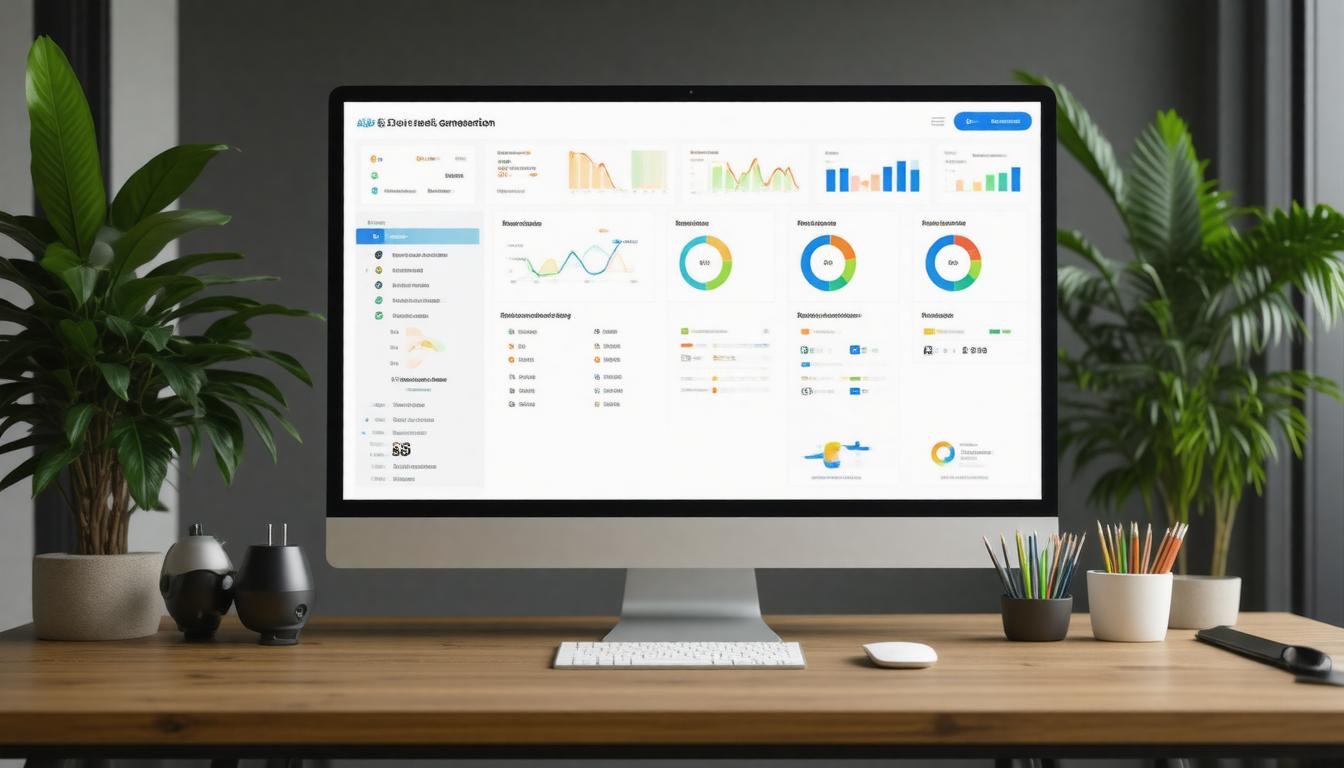
AI has revolutionized lead generation by mining vast datasets to pinpoint companies and contacts that align with our ideal customer profiles (ICPs). Instead of relying on guesswork or generic lists, AI digs deep into patterns within our accounts and customer base to zero in on prospects who truly fit our sales targets.
This means we spend less time chasing cold leads and more time engaging with those likely to convert.
The process begins by feeding AI systems data about our existing customers—their industries, company size, purchase behaviors, and even subtle engagement signals.
These platforms use machine learning algorithms to identify common traits among top-performing accounts and predict which new potential leads share those attributes.
By automating this pattern recognition, AI frees us from manual segmentation tasks that were once tedious and error-prone.
Moving beyond internal data, AI’s ability to scrape public sources broadens our lead pool in ways traditional methods simply can’t compete with.
Social media and web scraping are critical components of modern lead discovery. The AI doesn’t just scan LinkedIn profiles; it mines forums, blogs, niche websites, news mentions—anywhere prospects might leave digital footprints.
This gives us access to fresh intel about organizational changes, budget announcements, or new projects from specific accounts that signal buying intent.
However, it’s essential to balance this powerful data gathering with strict adherence to privacy laws like GDPR. Responsible use safeguards both our reputation and legal standing.
Coupling real-time web insights with rich internal profiles means we’re no longer fishing with a wide net—we’re casting a precise line aimed at the right fish, targeting the specific accounts that matter most.
This fusion dramatically increases conversion rates because outreach is grounded in timely, relevant context rather than generic assumptions.
| AI Tool | Features | Benefit |
|---|---|---|
| Cognism | AI-generated company research summaries | Saves hours on manual research; provides compliant EU data ensuring trustworthy targeting |
| Overloop AI | Personalized multi-channel outreach | Enables scalable yet highly tailored outreach improving engagement and response rates |
| CorporateOS | Real-time lead searching | Guarantees access to the freshest leads directly from source reducing stale contacts |
Using these tools synergistically unlocks even greater value: Cognism’s research outputs prepare us before outreach; Overloop AI automates personalized messaging spread across channels; CorporateOS ensures the very leads we contact reflect current market realities.
In practice, this layered approach means fewer dead ends and faster warm introductions for the accounts we’re targeting.
Embracing AI for lead generation reshapes workflow from reactive hunt-and-hope tactics into strategic outreach powered by data-driven certainty, ultimately revolutionizing the way we manage and grow our accounts.
It reduces wasted effort while sharpening focus on prospects ready for meaningful conversations—accelerating deal cycles without sacrificing quality.
Having optimized how we find the right leads, the next step is refining how we speak directly to them, making each interaction feel tailor-made by leveraging AI insights effectively.
Personalizing Outreach with AI

We all know that generic sales messages rarely resonate. What AI brings to the table is the power to tailor every email, call script, or social media message to fit not just a company’s profile—but the personality and preferences of each individual prospect.
This means our outreach can feel *authentic* rather than automated, which is crucial in building trust early on.
To start, behavioral analytics driven by AI allow us to decode subtle cues from a lead’s digital behavior—things like how they interact with emails, what content they spend time reading, and even their activity patterns on social platforms.
Tools like Crystal take this further by mapping communication styles using the DISC model. For instance, when we recognize a prospect as an analytical thinker who values data precision, our messages can lean into detailed stats and clear logic rather than broad statements or emotional appeals.
This doesn’t just improve engagement rates; it shows respect for the prospect’s unique viewpoint.
Beyond tailoring content, the real game-changer is how AI helps us learn what works best through A/B testing and adaptive feedback loops.
Traditional A/B testing requires manual setup and prolonged observation periods, but AI automates this process end-to-end. It sends out different variations of messaging in real time and analyzes responses immediately—opens, clicks, replies—to identify top performers.
The system then continuously evolves outreach sequences based on data rather than guesswork. This cycle of rapid experimentation ensures our campaigns stay fresh and aligned with ever-shifting buyer preferences without adding extra workload on our teams.
But understanding how prospects *feel* about us over time is just as important as crafting the perfect first message.
Predictive sentiment analysis leverages historical communication data to gauge whether a lead is warming up or growing distant. This insight enables us to time follow-ups wisely—knowing when to push forward aggressively or dial back—and personalize tone accordingly.
Rather than blindly sending routine reminders or generic check-ins, we can respond sensitively to a prospect’s mood toward our brand. That kind of emotional intelligence grounded in AI elevates our outreach from noise to conversation.
Incorporating these personalization layers isn’t about replacing human intuition; it enhances it by equipping our sales teams with precise insights and tools.
As a result, we’re able to craft smarter outreach campaigns that not only increase open and response rates by 20–40% but also deepen relationships that move deals faster down the funnel.
“AI personalization shouldn’t be viewed as a tech luxury—it’s quickly becoming an expectation among B2B buyers who want relevant, respectful communication.”
Ultimately, blending behavioral profiling, automated testing, and sentiment prediction creates a dynamic framework where every message adapts fluidly to the individual prospect’s evolving context.
This approach transforms standard outreach into personalized journeys that build trust and accelerate sales success in 2026.
Understanding these advanced personalization techniques naturally leads us to consider how pricing structures reflect the value of such AI tools and their accessibility across sales organizations of varying sizes.
Pricing Models of Leading AI Tools

When we invest in AI tools for our B2B sales teams, knowing the underlying pricing models is essential to making informed choices that balance cost with capacity.
The reality is no longer the old one-size-fits-all subscription approach; instead, the market has shifted toward *hybrid* models that blend predictable fees with flexible usage-based elements.
Take subscription-based pricing first—it remains familiar and straightforward. Many CRM-integrated AI products, like Salesforce Sales Cloud, charge a monthly fee per user ranging from $25 up to $300 depending on features and access levels.
This model offers stability for budgeting since costs are fixed and easy to forecast over months or years. However, pure subscription plans can lack flexibility if usage surges unpredictably or if the need for high-performance AI spikes temporarily.
That’s why credit-based pricing has surged as a complement or alternative to flat subscriptions. Instead of paying a steady fee, users purchase credits representing computational resources—like processing power or API calls—which are consumed as AI performs tasks such as generating personalized emails or analyzing leads.
A tool like Overloop AI employs this system, allowing us to align costs closely with actual volume. It feels like buying tokens at an arcade: we stockpile what we expect and spend them when AI works its magic.
But careful tracking is necessary here to avoid unexpectedly running out or overspending during heavy usage periods.
Then there’s tiered pricing, which offers a range of plans based on volume and feature sets—from basic packages to premium offerings packed with advanced capabilities. Cognism’s annual plans, spanning roughly $12,750 to $17,000, illustrate this well. We can choose a lower tier if our team sizes or data needs are moderate and upgrade as demands grow without renegotiating contracts or jumping into complex credit systems mid-year.
What stands out about these models is their evolution toward *hybrids*: merging subscriptions for core access with credits or consumption tiers layered on top. This setup gives us both predictability and agility—steady baseline costs combined with the option to scale usage when campaigns intensify or new features roll out. It’s a dance between stability and flexibility that mirrors how B2B sales teams operate today.
To navigate these options effectively, we should start by assessing our team’s current AI consumption patterns and anticipated growth. Are we steady users who value consistent billing?
Or do we experience seasonal spikes requiring more elastic spending?
Combining this understanding with vendor transparency around credit unit definitions and tier distinctions can prevent surprises later.
Here’s a simplified breakdown of common pricing models for clarity:
| Pricing Model | Description | Examples | Pros | Cons |
|---|---|---|---|---|
| Subscription-Based | Fixed monthly/annual fee per user | Salesforce Sales Cloud | Budget-friendly, simple | Less flexible during usage spikes |
| Credit-Based | Purchase credits used per task/API call | Overloop AI | Pay-as-you-go aligns costs | Requires close monitoring |
| Tiered Pricing | Plans with different feature/volume levels | Cognism | Scalable & feature-rich | Higher tiers can be costly |
By embracing this nuanced understanding of pricing structures, teams gain the ability to select tools that not only fit budgetary constraints but also flexibly support evolving workflows and peak demands.
Grasping how these pricing models function lays the groundwork for another crucial factor in optimizing AI tool success — integrating these solutions seamlessly into existing sales platforms and processes.
This next chapter examines how integration capabilities can make or break your automation strategy.
Evaluating Integration Capabilities

When we talk about integration capabilities, we’re really considering how smoothly an AI tool can plug into the software environment our sales teams already use daily.
This isn’t just a tech buzzword—it’s the backbone of efficiency because if a tool doesn’t communicate well with our CRM, communication platforms, or other sales apps, it creates more friction than value. Integration defines whether data flows effortlessly or gets trapped in silos.
At its core, integration means that an AI tool can connect with other systems, sharing data and automating workflows without manual intervention.
For us, this often involves syncing call notes, updating lead records, or triggering follow-up tasks across platforms like Salesforce, HubSpot, or Microsoft Dynamics 365.
Without such connections, we end up juggling multiple tools separately, increasing the risk of missed information and duplicative effort.
API Integrations
Many top-tier AI solutions provide rich API integrations. This technical feature acts like a digital ambassador making sure diverse software speak the same language.
Taking Fireflies.ai as an example: it uses APIs to automatically log call transcriptions and summaries into CRMs like Salesforce and HubSpot.
This consolidation means our sales reps spend less time logging activities and more time engaging prospects.
While APIs can open powerful doors for automation and flexibility, they sometimes demand technical know-how to set up correctly. That’s where documentation quality and vendor support become vital considerations.
A robust API with clear guidelines transforms integration from a daunting task into a manageable process. Conversely, poorly supported APIs can drain resources and slow adoption.
Plug-and-Play Solutions
On the other end of the spectrum are plug-and-play integrations designed for rapid deployment without needing extensive IT involvement.
For instance, Gong.io offers straightforward connectors that instantly link to popular CRMs and communication platforms like Slack or Zoom.
These ready-made solutions let our teams hit the ground running without waiting weeks for custom development.
In a fast-moving sales environment, favoring tools with plug-and-play capabilities can save weeks of setup time and prevent frustration among users wary of extra complexity.
By choosing AI software that integrates easily out of the box, we reduce barriers to adoption and maximize productivity gains right away.
To effectively evaluate integration readiness when choosing AI tools, consider these points:
- Does the tool natively support your primary CRM and communication channels?
- Are integrations real-time or batch-synced? Real-time tends to yield fresher data.
- How much technical expertise is required for initial setup?
- Are there options for customization if your workflows have unique requirements?
- What vendor support and documentation are available during implementation?
Integration isn’t just about plugging tools together; it’s about weaving them into a cohesive system that enhances every stage of our sales process without unnecessary hurdles.
Looking ahead, as these connections become ever more sophisticated, new possibilities emerge that could redefine how sales teams leverage automation and intelligence on their journey to closing deals faster.
We now move forward to explore how innovations on the horizon promise to reshape the landscape of sales automation in meaningful ways.
Future Trends in Sales Automation

AI’s role in sales automation is not just expanding; it’s evolving in ways that will reshape how we engage with prospects and close deals. One of the clearest signs of this transformation is the rise of voice assistants and AI bots.
These are no longer simple command responders but sophisticated partners that assist sales reps in real time during calls and meetings.
Imagine having an intelligent companion whispering insights, relevant data points, or next-best-action suggestions as you talk to a client—this is becoming our new reality. It turns selling from a solo challenge into a guided experience, enhancing our confidence and precision.
Building on this, the concept of personalization in sales is undergoing a radical shift.
The future of hyper-personalization means going beyond surface information about prospects to analyze behavioral analytics deeply.
AI tools will assess countless data points—from online behavior to subtle signals during conversations—to craft pitches so tailored they feel uniquely designed for each individual prospect.
This degree of specificity doesn’t just improve engagement; it builds trust by showing the buyer that we truly understand their unique challenges and needs.
It’s akin to tailoring a bespoke suit rather than buying off-the-rack—a difference that today’s buyers increasingly expect.
Another powerful development complements this personalization: smarter forecasting.
Advanced predictive analytics will become indispensable for proactive decision-making. Unlike traditional methods focusing on past results, these next-gen tools use machine learning models that continuously improve by learning from incoming data.
This adaptive intelligence means forecasts won’t just be more accurate—they’ll be dynamic, shifting with market conditions and emerging customer signals.
We’ll move from reactive forecasting to anticipatory strategies, acting before problems arise or opportunities slip away.
Integrating these trends within existing technology stacks won’t be optional but essential. Experience shows fragmented toolsets can overwhelm teams with redundant data and alerts.
The future lies in unified platforms where AI layers smartly connect marketing, enablement, and revenue operations so teams can work smarter, not harder.
Through thoughtful adoption and ongoing refinement, these technologies promise efficiency gains and a fundamental shift in selling—less guesswork, more insight-driven action.
“Sales automation isn’t about replacing the salesperson; it’s about amplifying human potential through intelligent collaboration.”
Understanding these trends prepares us for a landscape where real-time assistance, personalized engagement, and predictive guidance drive success—and ultimately save time so we can focus on what matters most: building meaningful relationships with our customers.
Embracing AI-powered automation tools is no longer a luxury but a necessity for B2B sales teams striving for peak productivity in 2026 and beyond.
The teams that harness these innovations will transform complexity into clarity and uncertainty into opportunity.

Recent Posts
Monday.com Review 2026: Is It Still the Best Work OS?
I tested Monday.com against ClickUp, Asana, and Wr...
Updated July 27, 2026
AI Writing Software for Blogging in 2026: Best Tools + How to Stay AI-Search Vis...
The best AI writing software for blogging in 2026 ...
Updated July 20, 2026
HubSpot Review 2026: Is It Worth the Cost?
I tested HubSpot’s free CRM, Starter, and Pr...
Updated July 20, 2026
Teamwork.com Review 2026: Is It the Best PM Tool for Client Work?
I tested Teamwork.com for agency and client projec...
Updated May 29, 2026
Wrike Review 2026: Is It Worth the Cost?
I tested Wrike in real enterprise workflows. Here&...
Updated May 29, 2026
Asana Review 2026: Is It Worth It? (Honest, In-Depth Analysis)
I tested Asana across real team workflows. Here...
Updated May 29, 2026
Newsletter
Don't miss a thing!
Sign up to receive daily news